
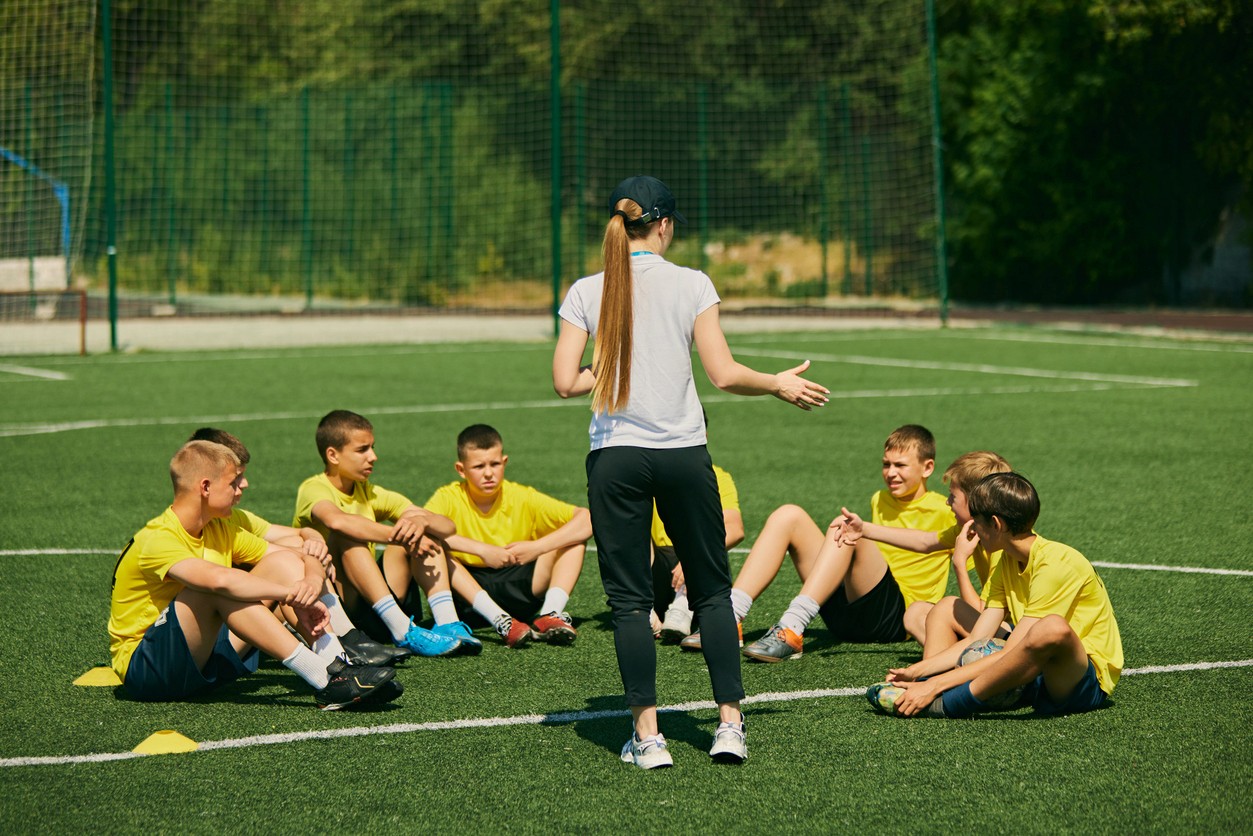
Running a football training session with young players? You know how quickly things can go sideways without a solid plan. These ten warm-ups are designed to get players moving, engaged, and ready to train effectively, while building key skills and preventing injuries.
Each game below works for ages 6–14 and can be combined into a complete 15–25 minute warm up block. Instructions follow a simple, step-by-step format so you can copy them straight into your session plan.
Why these warm-ups work:
Reduce the risk of strains and injuries
Get ball contact early
Keep young players focused
Encourage teamwork from the start
The Importance of an Effective Football Warm-Up
Warming up before a football match or training session is essential to prepare the body for activity and focus the mind for what lies ahead. A proper warm-up gradually increases heart rate and blood circulation, allowing the cardiovascular system to transport nutrients to muscles. A quality warm-up also provides an opportunity to clear the mind and set the tone for practice.
For U8, U10, and U12 groups, attention spans are short, so game-based formats are vital. The FIFA 11+ program has been shown to reduce injury risk by up to 39% when performed twice weekly.
Warming up increases muscle elasticity, enhancing speed, agility, and explosiveness
Injury prevention includes joint lubrication, reducing strains and tears
Mental preparation enhances focus and reduces anxiety
By preparing the body steadily, acute injuries like strains or pulls are significantly reduced
A well-structured warm-up typically lasts 10–15 minutes, transitioning from low to high intensity
Idea 1 – General Dynamic Warm Up (5–8 Minutes)
Dynamic stretching is recommended over static stretching to avoid temporary decreases in muscle power. A structured routine should follow the RAMP principle—focusing on controlled, repetitive movements that take joints through their full range of motion.
Begin warm-ups with 5–8 minutes of light cardiovascular activity. Set up a 30-metre lane using cones with players in two or three lines.
Movement sequence:
Jog forward and walk back
High knees (knee lift to 90°)
Butt kicks targeting hamstrings
Side shuffles for balance
Open/close the gate (hip circles)
Walking lunges with torso twist
Skipping with arm drive
Short 10-metre accelerations
Coaching points: Head up, stay light on toes, control direction changes.
Idea 2 – Relay Races With The Ball
Relay races combine competition and physical activity, helping players get their bodies moving before more intense drills. Teams compete by having each member complete a leg of the race before the next player can start.
Set up: 3–4 lanes, 15–20 metres, 4–5 players per team.
Relay ideas:
Straight dribbling and turn at cone
Slalom through cones spaced one metre apart
Two-touch passing relay through a target gate
Variations: Use the left foot only, add timed pressure for older groups, or award points for accuracy alongside speed.

Idea 3 – Rondos To Switch On Brains and Feet
Rondos help players improve ball control and communication skills by practicing possession in a small group setting. One team keeps the ball against a smaller number of defenders, improving passing and space creation.
Set up: 6x6 metre square, 4v1 or 4v2.
Focus on first touch and body angle
Call for the ball
Stay on toes, scan before receiving
Progression: limit to one-touch in the center zone
Switch defenders after three passes lost
Idea 4 – Tag Games For Young Players
Tag games help players work on speed, reactions, and quickness—perfect for younger teams who learn through play.
Cone Island Tag
Equipment: 10–15 cones, playing area 20x30 metres
Set Up: Create small 2x2 metre cone squares as safe zones. Choose two or three taggers.
How to Play:
Players dribble a ball while avoiding taggers
When tagged, freeze and perform five toe taps or a Cruyff turn
Another teammate can free you by completing the same movement
Players must create a new move each time they’re tagged
Ways to Level Up:
Increase taggers
Shrink the space
Require an inside-outside move to break free
Idea 5 – Ball Mastery Warm Ups
Ball mastery gives every player hundreds of touches to build confidence before main practice.
In a 20x20 metre grid, coach calls move every 20–30 seconds:
Toe taps (alternate feet)
Inside-inside rolls
Sole rolls across the the body
L-turns (drag back, pivot)
V-pulls
Foundations (all-surface juggles)
Challenge: Count touches in 20 seconds. Focus on both feet—keep the ball within one step.
Idea 6 – Footwork and Agility Challenges
Set up 2–3 agility lanes so players aren’t waiting in a long line.
Quick feet through the ladder
In-out steps for leg coordination
Lateral shuffles
Forward sprint into back pedal
Zig-zag cuts around cones
Ball integration: Receive a pass at the end, take two touches, and shoot at a mini goal. Add random colour calls for reactive agility.
Idea 7 – Technical Skills Circuits
A technical circuit links three or four mini-stations into one continuous warm-up block, ideal for larger groups.
Example stations (2 minutes each):
Station 1: Passing in pairs at 10 metres
Station 2: Dribbling through gates
Station 3: 1v1 move past defenders and finish with shooting
Rotate clockwise on the whistle. Complete the course in 8–10 minutes.
Idea 8 – Possession Games to Raise Intensity
For U12+ players already warm from earlier activities, possession games bridge into match intensity.
4v4+3 neutrals in a 25x15 metre grid:
Score points via consecutive passes
One side defends; swap after each win
60–90 second rounds
Coaching focus: Support angles, quick transitions, and communication when the ball is in the middle.
Idea 9 – Finishing Games Late In The Warm Up
Place shooting drills near the end once muscles and joints are fully ready.
Bounce pass and shoot: Server outside the box, striker checks away, then receives and finishes
3v2 to goal: Start from halfway, six-second time limit
Rapid box shots: Multiple balls lined up, players take turns hitting different corners
Include both feet. Mix low-driven shots with near-post finishes for accuracy.
Structuring a Complete Warm Up For Your Training Session
A solid warm-up routine lasting 15–30 minutes should include jogging, hip mobilization, lunges, and controlled agility exercises. Warm-up routines should increase intensity gradually, starting with light jogging and finishing with high-speed movements.
Sample 20-minute plan:
5 min: Dynamic warm up
5 min: Tag game or ball mastery
5 min: Rondo
5 min: Possession or finishing
Match-day alternative (12 min): Dynamic movements → technical skills → light finishing.
Adjust timing by age: U8 around 10–15 minutes, U12 around 15–20 minutes.
Final Tips For Fun, Safe, and Effective Warm Ups
Consistent warm-up routines can reduce anxiety and improve performance by preparing the mind and body effectively. Effective warm-up routines should focus on dynamic movements that replicate actions used during play, running, jumping, and kicking.
Quick reminders:
Keep players moving, no more than ten seconds standing still
Keep instructions short (10–15 seconds)
Progress from low to higher intensity (40–80% heart rate)
Include the ball early
Adapt to age, group size, and weather
Mix one or two familiar warm-ups with one new game weekly
Save your favourites and reuse them through the season.

