
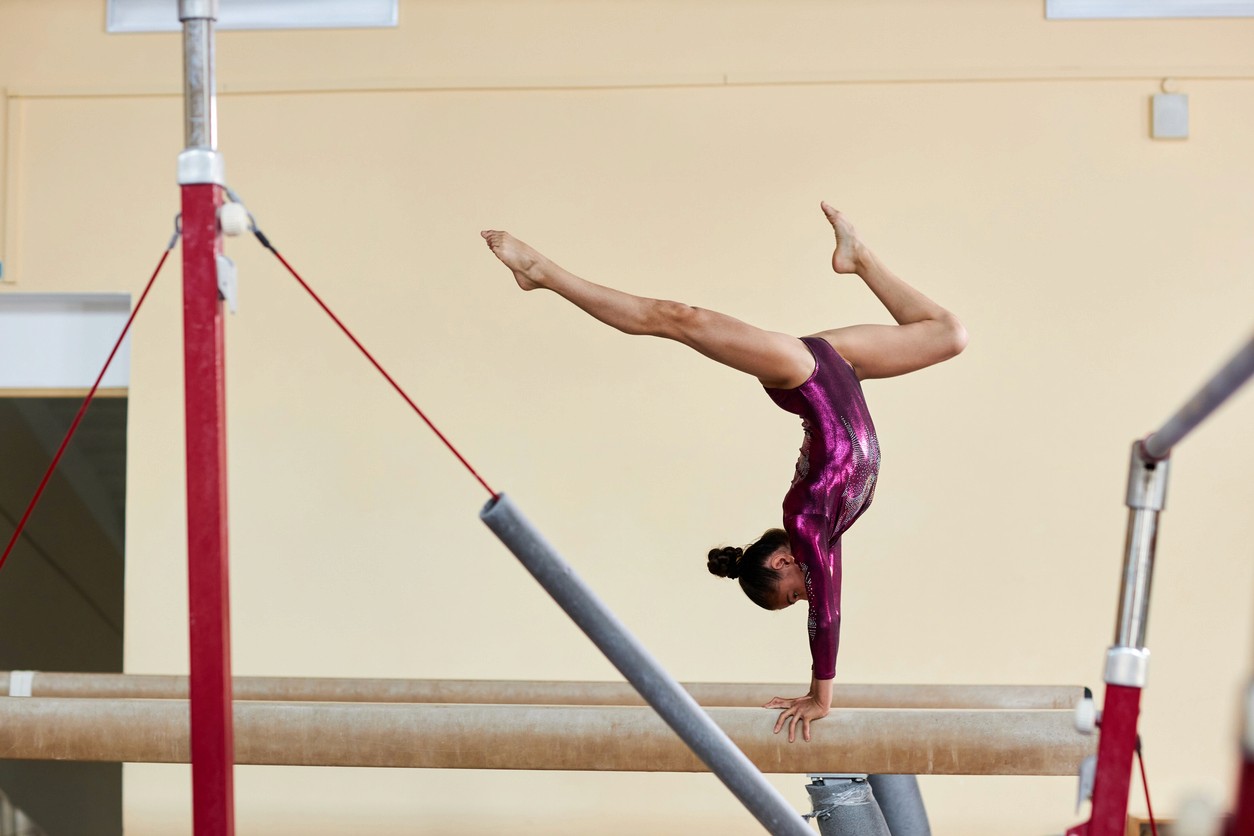
Every gymnastics workout should begin with a proper warm-up. A structured dynamic warm-up gets the blood flowing, raises body temperature, and prepares joints and muscles for the high-impact demands of landings and tumbling. But you know this already.
High-level flexibility helps reduce the risk of muscle strains, tears, and other common injuries by allowing the body to move freely and absorb impact well.
This guide focuses on conditioning warm-ups that gym instructors and coaches can easily implement in their training sessions.
Key Principles of a Safe Gymnastics Warm Up for Kids and Teens to Reduce Injury Risk
A suitable warm-up for gymnasts typically follows a progressive structure: pulse raiser → dynamic stretches → activation and core strength → skill-specific drills → cool down.
Warm-up routines should usually last 10–15 minutes for recreational classes and 15–20 minutes for competitive squads, with a clear structure that is easy to apply while elevating core temperature, increasing joint mobility, and activating the nervous system.
Joint mobility should be improved using active movements rather than long static holds, as they can temporarily reduce explosive power. Younger gymnasts (6–10) should focus on movement patterns and fun, while pre-teens and teens can add more targeted conditioning through age-appropriate coaching, controlled movement, and progressive overload.
Stage 1 – Dynamic Warm Up: Get the Blood Flowing (3–5 Minutes)
This phase raises heart rate, warms joints, and supports injury prevention before any gymnastics exercises. A proper warm-up routine should include light aerobic activity, such as jogging or skipping.
Key movements:
Light jogging around the floor
Skipping and side shuffles
Backward jogging in a supervised space
For older gymnasts, add simple plyometrics: gentle two-foot jumps, small tuck jump variations, and line hops. Jumping is a foundational exercise for gymnastics that builds muscle and warms the whole body quickly, helping to train proper landing techniques and reduce injury risk.
These exercises prepare calves, quads, hamstrings, glutes, and shoulder muscles for vault, runway sprints, and tumbling passes. This stage also prepares gymnasts physically for the demands of training and performance.

Stage 2 – Dynamic Stretching and Mobility for Young Gymnasts
Dynamic stretching and dynamic mobility involve controlled movements that increase heart rate and muscle temperature, preparing the body for physical activity, and are best performed before gymnastics training sessions or competitions. Unlike static stretching (which belongs at the end and is supported by research), dynamic stretches improve range of motion without reducing power output.
Essential drills:
Arm circles (small to large, forwards and backwards) warm the upper body and shoulders for handstands and bar swings
Leg swings front-to-back target hip flexors and hamstrings; side-to-side swings prepare adductors for middle splits and leaps
Walking lunges with a gentle twist mobilize the hips and thoracic spine; lunges and squats are effective exercises for lengthening and strengthening the legs, significantly benefiting a gymnast's front splits
For gymnasts 11–17, add inchworms: from standing, lean forward, walk hands to plank position with legs extended, then walk feet flat back to hands. This connects hamstring mobility with shoulder stability. Keep cues focused on posture, so instructions stay easy for young gymnasts to follow, with no long holds and plenty of body awareness.
Stage 3 – Activation and Core Strength in the Warm Up
The warm-up routine should include activation exercises that target key muscle groups such as the core, glutes, and shoulders to ensure gymnasts move with better joint stability and body control during training. These drills also help build confidence before skill work. Activating the core is essential for protecting the spine and maintaining balance during landings.
Core drills: | Exercise | Target Muscles | Duration/Reps | Hollow hold | Rectus abdominis, transverse abdominis | 10–20 seconds | | Dead bugs | Core, obliques | 8–10 per side | | Plank position | Abdominal muscles, lower back | 10–15 seconds |
Lower body activation:
Glute bridges (10–12 reps): fire the gluteus maximus for hip extension power
Monster walks with resistance bands: target hip abductors for single-leg balance beam work
Upper body activation:
Scapular push-ups (8–10 reps) and wall slides activate scapular stabilizers essential for bar work
Start in the down dog position, then shift to the plank to connect the shoulder muscles with core activation
Keep reps low-to-moderate so gymnasts can continue into skills without unnecessary fatigue.
Stage 4 – Event-Specific Warm Ups and Conditioning
Once the general dynamic warm-up is complete, add short blocks that mirror actual gymnastics practice on each apparatus. These sport-specific drills reinforce correct shapes and movement patterns.
Event | Drills | Muscles/Benefits |
|---|---|---|
Floor | Straight jumps, split jump, straddle jump on a line | Quads, glutes, and prepare legs for tumbling |
Beam | Walking on the floor line with knee lifts, relevé walks | Targeted balance training strengthens ankles and knees |
Bars | Hanging shrugs, hollow-arch swings, and active shoulder taps | Grip strength, shoulder mobility, working muscles of the upper body |
Vault | Short sprints, arm pump drills, two-foot take-offs | Fast-twitch quads, deltoids for board pop |
Age-Specific Conditioning Focus: Children vs. Teen Gymnasts
Conditioning inside gymnastics warm-ups should respect growth, coordination, and attention spans.
Younger gymnasts (6–10):
Games and simple exercises like frog jumps, bear crawls, and straddle position holds
Focus on body awareness and fun rather than high reps
Start from the starting position with knees bent, then progress
Pre-teens (11–13):
Structured sets: squats with foot forward, walking lunges, wall sits
Emphasis on technique, gently press through each movement with hips square
Teen gymnasts (14–17):
Add single-leg Romanian deadlifts (right leg, then left foot planted)
Side planks and hip openers with active flexibility work
Integrate resistance bands and light strength training
Growth spurts affect limb length and joint sensitivity. Fatigue early in the session can compromise skill learning, so conditioning should support, not replace, event training.
Cool Down: Static Stretching and Recovery After Gymnastics Training
Static stretching, which involves holding a stretch for a period of time, is most effective when performed after a workout to improve flexibility and aid recovery. With soft tissue already warm, this is the ideal moment for holds of 20–30 seconds.
Key stretches:
Hamstring pike stretch (leg straight, lean forward)
Front and middle splits (hip flexor focus)
Quad stretch and leg raises
The bridge holds for the shoulders and chest
Proprioceptive neuromuscular facilitation (PNF) stretching combines active contraction and passive stretching to enhance flexibility more rapidly than static stretching alone—recommend supervision for this technique. Add 2–3 minutes of deep breathing to lower heart rate and support nervous system recovery. Better flexibility contributes to improved technique, making it easier for gymnasts to maintain correct positions during routines.
Sample 15-Minute Warm-Up for a Youth Gymnastics Class
Here’s a ready-to-use sequence for ages 8–13
Time | Block | Activities |
|---|---|---|
0–3 min | Pulse raiser | Light cardio: jog, skip, side shuffles—get blood flowing |
3–7 min | Dynamic stretching | Arm circles, leg swings (leg forward, then side), walking lunges, inchworms |
7–11 min | Core activation | Planks (15s), hollow holds (10s), glute bridges (12 reps), scapular push-ups (10 reps) |
11–15 min | Event-specific | Straight jumps, split jumps for floor; line walks for balance beam; 2–3 short sprints for vault |
This routine also gives coaches a clear structure to use in a video demonstration if needed.
Improved flexibility allows gymnasts to achieve a wider range of motion in their movements, enabling them to perform various advanced skills with greater ease. This good workout routine can help avoid injury and build the foundation for safe gymnastics equipment use.
Ready to standardize your gymnasts' warm-ups and keep every class running safely? Book a demo with our team to learn more about gymnastics studio software, or create your free account here. Or learn more about running a gymnastics club in our blog posts:
How To Start A Gymnastics Club
What Is the Best Way to Organize a Growing Gymnastics Club?
Best Gymnastics Software in 2026: Run Your Club Without Drowning in Admin

