
How to Structure Your Swimming Lessons (So Every Length Counts)
When you’re teaching back-to-back in a busy pool, lesson planning can easily become one more thing squeezed between registers, parent questions, and wet goggles on the floor. But knowing how to structure your swimming lessons gives every session a clear aim, helps swimmers make steady progress, and makes life much easier for teachers, coaches, and club admin.
Here’s a practical framework you can use for different ages, skill levels, and programs, from baby sessions to adult swimming lessons and performance training sessions.
Start With Clear Goals for Your Swim School or Swimming Club
A strong lesson starts before anyone gets in the water. For busy swim school owners and swimming club teams, a simple structure saves time, keeps lessons consistent, and helps every swimmer understand what they are working toward.
Start by choosing one primary goal for each six to eight-week block. This keeps your plan focused and stops each week from feeling like a random workout.
For example:
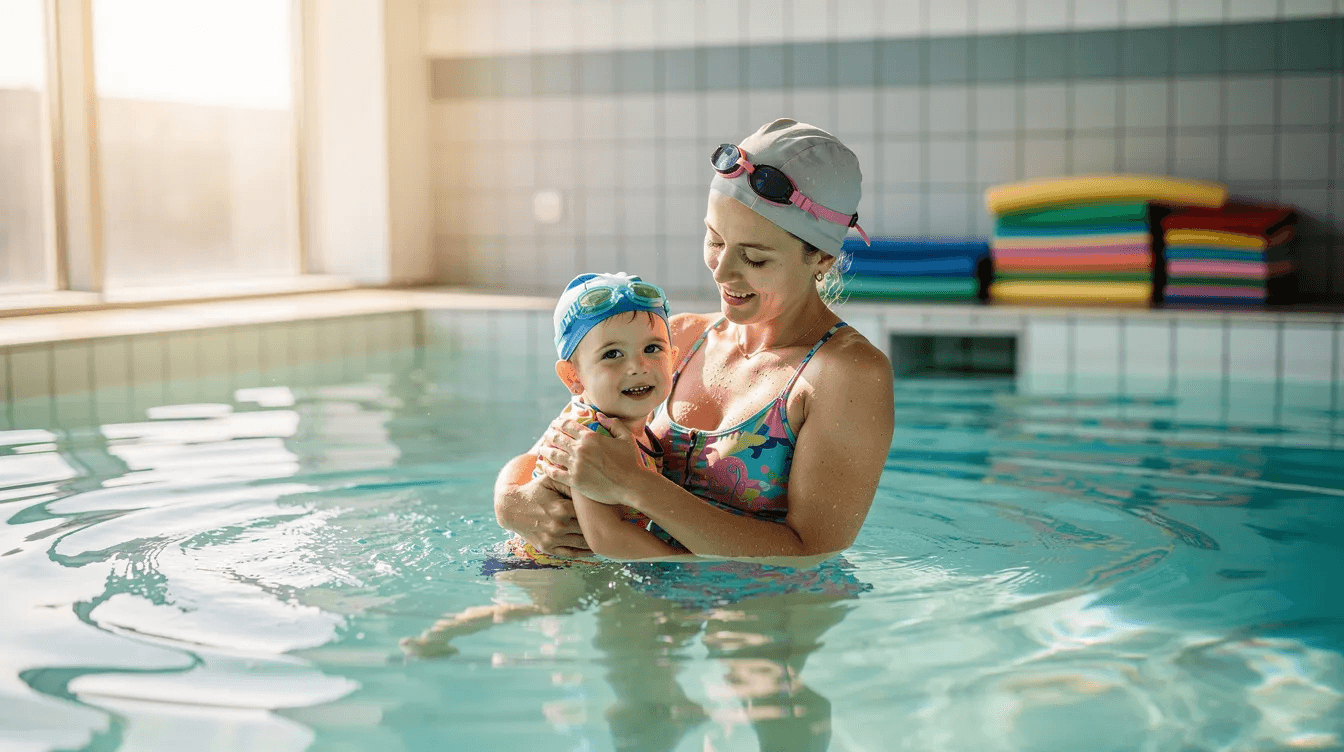
Baby & toddler: develop water confidence, relaxed floating, and happy parent-supported movement by the end of the course
Children’s stages: swim 10m or 25m with safe breathing and good body position
Club performance squads: improve starts, turns, stroke technique, and underwater push-offs, ready to compete
Inclusive classes: build confidence and swimming ability in a way that is suitable for pupils with disabilities or additional support needs
Once you know your end goal, work backwards:
Week one: water confidence, pool rules, safe entries, blowing bubbles
Week four: assisted floating, gliding, treading water, and early stroke shapes
Week eight: 10m swim without aid or a distance challenge matched to ability
A typical swimming lesson structure for children includes stages that progress from basic water confidence and safety skills to more advanced techniques and endurance training, often categorized into levels such as beginner, intermediate, and advanced.
Use a Consistent Lesson Template for Every Age Group
Consistency is underrated. When swimmers know what's coming, they settle faster, focus better, and get more from the session. Use this structure for every lesson, then adjust the difficulty — not the order.
Section | Time | What happens |
|---|---|---|
Welcome & briefing | 3 min | Register, pool safety, today's aim |
Warm-up | 5 min | Easy swim, bubbles, floats, or kicking |
Skill focus | 10 min | One clear technique point |
Practice sets | 7 min | Repetition with rest |
Fun game | 3 min | Apply the skill through play |
Cool down & review | 2 min | Easy finish and what's next |
This works for a 25-minute preschool session and a 45-minute club technique session. Same bones, different muscle.
One Focus. Not Five.
This is where most lessons quietly fall apart. A teacher spots six things to fix and tries to address all of them. The swimmer hears noise.
Pick one thing:
Beginner: horizontal body position and blowing bubbles
Improver: side breathing every three strokes
Intermediate: long arm recovery with a steady kick
Club swimmer: underwater phase off every wall to 5m
Breaststroke: the pull–breathe–kick–glide sequence and its timing
One clear point, explained simply, practised until it sticks. If they've nailed it with ten minutes to spare, add a challenge — don't add a second technique.
Build the Core Technique Section Around One Main Focus
Every lesson should have one clear focus. Not five things. Not a full stroke rebuild. One thing swimmers can understand, practice, and improve.
That focus might be:
Beginner: horizontal body position and blowing bubbles
Improver: side breathing every three strokes
Intermediate: long arm recovery and steady kick
Club swimmer: underwater phase off each wall to 5m
Breaststroke: pull, breathe, kick, glide timing
Butterfly: dolphin kick originating from the hips
Breaststroke focuses on the "pull, breathe, kick, glide" timing, while butterfly emphasizes the dolphin kick originating from the hips. These are great examples of why one lesson needs one technical point. If you try to teach arm pull, kick, timing, breathing, and distance all at once, swimmers can quickly feel overwhelmed.
Effective swimming lessons for beginners involve building water confidence, ensuring safety, and teaching foundational skills in a logical, engaging progression.
Add Practice Sets and Games That Reinforce the Skill
Fun isn't a reward for good technique. It is the technique session, just wearing better clothes. The trick is choosing games that reinforce the skill you just introduced.
Treasure hunt dives — breath control, confidence underwater, safe diving practice
Red light, green light kicking — streamlining, stopping, starting, body control
Bubble relay — breathing rhythm under mild, manageable pressure
Float statues — balance, calm body position, and stillness in the water
Shark and minnows — kicking speed, direction change, stamina
Games work for adults too, handled at the right pace and framed as a challenge rather than a children's activity. Swimmers who are relaxed and enjoying themselves learn faster. It's not a coincidence.
Close Every Session With Review, Safety, and Next Steps
Don't let lessons fizzle out while everyone hunts for their goggles. The final two or three minutes are some of the most valuable in the whole session.
Bring the group in, do an easy length or a supported back float, then share three things:
One achievement: "You all kept your faces in for much longer today."
One next step: "Next week we'll work on breathing every three strokes."
One note for parents — short, specific, and said before they've reached for their towel.
Then update your records the same day. Registers, skills tick-lists, badge progress, attendance. Memory is not a system.
Make More Time for Teaching by Automating Your Swim School Admin
Once your lesson structure is in place, the real challenge is finding the hours to actually use it. Club admin can feel like a full-time sport of its own.
Class Manager swimming club management software helps swim schools, clubs, and activity providers handle the busy stuff in one place — scheduling, enrolments, billing, parent communications, and member portals. Clubs typically save around 25 hours a week on admin, time that goes back to planning, teaching, and being poolside.
Whether you run a small swim school or a growing club, the trade-off is simple: less admin, more swimming. Book a demo with our team, or create your free account here.
Want to find out more? See our latest blog posts and resources:

