

Why Attendance Reporting Matters in 2026 for Studios
Attendance reporting in a class-based business isn't just about ticking names off a register - it's about turning a list of ticks and crosses into smart business decisions. When you know who was in the room, who's drifting away, and which sessions are thriving or struggling, you can run your studio with real confidence.
But collecting, reading and acting on relevant data can be confusing. Which is why, at Class Manager, we've made attendance tracking and reporting easier than ever inside our class management software.
Capturing Accurate Attendance: Foundations for Reliable Reporting
Reports are only as good as the data going in. If teachers forget to take registers on the correct spreadsheet, or scribble on paper that gets lost, everything else falls apart - so the first drill is making daily check-ins effortless.
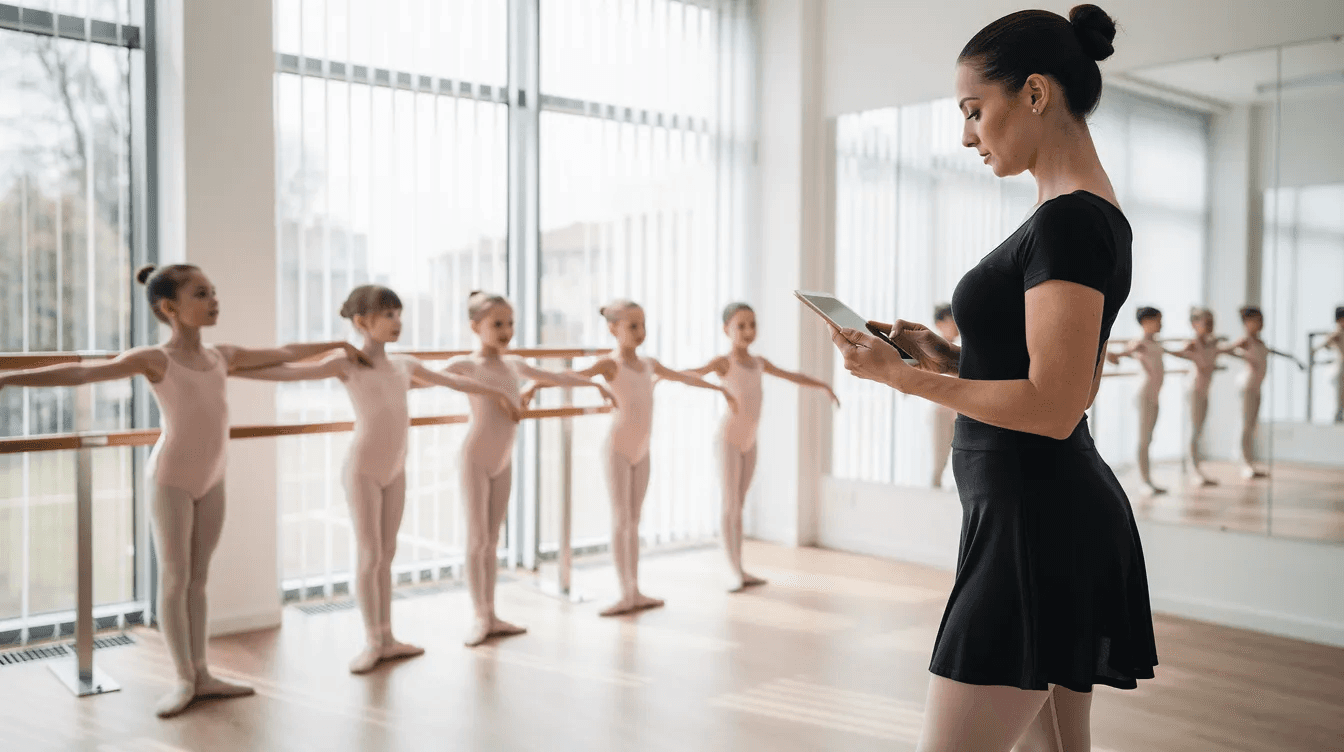
With Class Manager, attendance can be taken at any time from any device: laptop at reception, tablet in the studio, or a teacher's phone. Dance studio software can track attendance in real-time, with handy push notification reminders, to help ensure it's not forgotten!
Accurate attendance tracking not only reduces admin work- no more copying and pasting across spreadsheets, trying to decipher hand-written scribbles, or making attendance notes from memory- but improves the overall management and safety of your staff and members.
Attendance Reporting in Class Manager: Key Views and Member Reports
So what do attendance reports actually look like?
By Class Report: Select a date range (e.g. 01 January – 31 March 2026) and there you will see all of the classes from that time frame. You will then be able to see the number of attendees registered for the session, the total number of absences and the overall absence rate, colour coded, so you can see when a class is at risk!
For example, the report for the Contemporary Level 3 class between 8 April and 30 June 2026 shows 86 sessions marked, with 12% average absence. That type of snapshot makes it easy to spot which classes need attention.
By Student (Member Report): This view shows each member's attendance across all enrolled classes, and how many classes they're enrolled in, highlighting students falling below thresholds, colour-coded into a traffic light system, so you can see at-risk students at a glance.
By Date / Session: Need to check who attended the ten rehearsals before your June 2026 showcase? This view lets you drill into specific performance blocks or competition prep periods.
Reports can be exported to CSV, so you can download them to share with teaching staff, print for a meeting, or cross-check with exam boards.
Spotting Trends and Patterns
Attendance reporting isn't just about individual absences - it helps you highlight patterns across your entire business.
Comparing class slots: Is Monday 5pm Kumite Sparring performing better than Wednesday 5pm Sparring? Pull both reports side by side, and you might learn that Wednesday calls for a schedule change because parents simply can't make that time. Using attendance data effectively can support timely interventions for better engagement before members quietly leave.
Assessing locations: If the additional studio you opened in September 2025 has consistently lower attendance than the main site, the reason might be transport, parking, or visibility. The number of absences at one location versus another can highlight if the rent on the additional location is worth it.
Teacher-linked patterns: If a particular coach's classes show higher no-show rates compared to a similar class with another staff member, this could signal a student engagement or communication issue worth exploring. Many dance studios use attendance tracking for performance evaluations, and this data gives you the facts to have a supportive conversation rather than guessing.
Age group insights: Teenagers registered for a Friday 7pm hip-hop class regularly missing? That might hint at clashes with social life or transport. Establishing a dedicated lead for attendance can streamline monitoring and intervention efforts - consider assigning one staff member to review these trends weekly.

Using Attendance for Progression, Exams, Belts, and Teams
Attendance can also shape progression decisions. Exam entries, belt gradings, competition teams, and show casting are all decisions that attendance tracking can support.
Before a ballet exam session, a teacher can pull a report showing each student's attendance over the preceding 8–12 weeks. If your studio's policy requires a minimum 80% attendance in the run-up to exams, the member report confirms compliance.
For martial arts or acro, instructors can review attendance from the last grading period before promoting a student to a new belt or level. If a student's progress seems slower than expected, one glance at their record might show they've only made 60% of classes. The issue might not be ability at all. It might just be that they're missing too many lessons.
Competition and team selection become more objective too. On a comp squad, one person's performance affects the whole team, so if someone has a track record of poor attendance, and that could put the squad's results at risk, you may not want them on the team, no matter how good a dancer, fighter, or player they are.
Supporting At-Risk Students and Family Situations
Attendance reports can uncover subtle patterns in individual students that are easy to miss week to week - and this is where they can help past the four walls of your studio.
Consider a child from a co-parenting home who is always present on "Mum weeks" but often absent on "Dad weeks." When you filter attendance by calendar weeks in autumn 2026, the split becomes visible. That's not a reason to penalize - it's a reason to reach out, offer a different class on alternate weeks, or simply note the pattern.
Consistent absences from teen dancers might indicate they're skipping or struggling with motivation. Rather than assuming the worst, reports give you factual information to start a supportive conversation. Effective communication tools streamline parent and student engagement, and parent portals facilitate direct communication with studio owners when families need to share feedback about what's going on.
Class Manager allows notes on attendance records, so staff can log reasons - illness, transport issues, family changes - and see these next to the data.
Integrating Attendance Reporting Into Wider Dance Studio Management
Attendance is one piece of a much bigger picture. Inside Class Manager, enrollment, class scheduling, billing, and communication all connect to your attendance data - and that's where long-term success really builds.
Student enrollment processes can be automated through software, and cloud-based software simplifies class registration for dance studios. Enrollment management is crucial for streamlining studio operations, while automated enrollment reduces administrative burdens for studio owners.
Having everything in one studio software platform - rather than scattered across spreadsheets - means consistent records, no duplication, and a clear history. It saves hours every month and gives you the information you need to take action.
Class management software reduces administrative tasks by 25 hours weekly, giving you back the time that matters. Want to find out more? Book a demo with our team, who can take you through it all. Or, create your free account here.
Or, learn more in our past blog posts here:
Football Registration Software: How to Streamline Signups, Payments, and Data for Your Club
7 Payment Friction Points Killing Class Studio Revenue (And How To Fix Them Fast)
Why Class Manager Is The Best Class Management Software For New Class-based Businesses?
Why Class Manager Is the Best Option for Your Management Software?
Automated Emails for Trials, Enrolments & More: Let Class Manager Do the Chasing
Reporting Software for Dance Studios: How to Turn Class Manager Data into Smart Decisions
The Benefits Of Utilising Automated Trial Emails for Studio Owners

